
Key Takeaways
- Media production pricing is driven by scope, crew, and usage rights, factors that carry far more weight than runtime or page count.
- Two “similar” projects can land at very different price points. Locations, talent, revisions, and how many stakeholders need to sign off all move the number.
- A rough budget range before you request quotes keeps every conversation grounded. You’ll ask better questions and spot a mismatched proposal faster.
- The smartest brands treat production as part of a broader marketing strategy, connected to real business goals rather than negotiated shoot by shoot.
- The right partner protects your budget better than the lowest bid does, because they understand what the content actually needs to accomplish.
Listen to a discussion of this blog ?
You’ve probably been there: you reach out to a few production companies about what feels like the same project, and the responses don’t line up. One comes in at $4,000. Another at $18,000. A third asks to schedule a discovery call before giving you any number at all—which, to be fair, is standard when it comes to quoting a production project accurately.
Each of these responses can be a fair reflection of a real project. Media production pricing can seem unclear from the outside because so much of what drives the cost happens before a camera ever gets turned on: how the project is scoped, who’s involved, what happens to the footage after the shoot. But when you don’t know what’s actually driving the number, it’s hard to know whether a quote is fair, let alone whether it’s the right investment for your business.
This is where a lot of growing brands get stuck. You know you need more content, whether that’s video for a new product line, brand photography to support a rebrand, or footage for a campaign launch, but you’re pricing it out project by project, vendor by vendor, without a clear sense of what a healthy budget actually looks like. That’s a lot of decision-making weight to carry alone, especially on top of everything else growth already has you managing.
So let’s walk through what actually shapes a media production budget, why two projects that look alike on paper can land in completely different places, and how to think about production spend as part of your overall marketing strategy instead of a one-off line item in your budget.
The Building Blocks of Media Production for Brands
“Media production” covers more ground than most people expect, but it really comes down to two categories: brand photography and video production. A photography project might mean product shots, lifestyle imagery, or a full brand photoshoot built to support a launch or an ongoing content calendar. A video project covers everything from a testimonial or case study video to social-first content, motion graphics, or a multi-part campaign, all still falling under the same video production umbrella.
Sometimes, the scope can be accomplished in a single-day shoot. Other times, it requires a multi-day production with a full crew, a formal script, and a post-production timeline stretching well past the last day on set. That range is exactly why “how much does this cost” doesn’t have one easy answer. A five-minute explainer video and a five-minute customer testimonial video can require entirely different levels of planning, crew, and post work, even though they end up the same length.
Brand Photoshoots vs. Video Production Shoots
Photography and video get budgeted differently because they solve different problems…
A brand photoshoot is usually about building a library: product shots, team and facility photos, lifestyle images you’ll reuse across your website, social media, and sales materials for a year or more. The cost is mostly driven by how many setups and locations you need in a day and how much retouching happens afterward.
Video is a different animal. Even a short video usually involves a script or outline, a shot list, audio considerations, and an editing process that can run longer than the shoot itself, especially once you factor in revisions, music licensing, and versioning the same footage into a full cut, a social cut, and a few paid-ad variations.
The Factors Behind Every Media Production Budget
Once you understand what’s included, the next question is what actually moves the price up or down. It’s rarely just “how long is the video” or “how many photos do we need.”
Here’s what tends to carry the most weight:
- Scope and deliverables. One final video costs less than the same footage delivered across five channel formats. Every additional deliverable adds time in the edit, whether or not the raw footage changes.
- Crew and equipment. A one-person shooter with a single camera is a different investment than a director, a DP, a sound tech, and lighting gear. The right crew size should match what the production actually needs.
- Locations and travel. A studio shoot is more predictable than a multi-location shoot across three restaurant concepts or a manufacturing floor with safety and scheduling requirements of its own.
- Talent and usage rights. Hiring on-camera talent, or licensing how long and where footage can run, changes the number well before editing even starts.
- Post-production and revisions. Editing, color, sound design, motion graphics, and rounds of feedback are often where budgets quietly grow, especially without an agreed number of revisions up front.
- Timeline. A rushed turnaround for a trade show or a seasonal campaign almost always costs more than a project with a standard turnaround time.
Why Two “Similar” Projects May Require Completely Different Costs
This is the part that typically trips people up most. A private healthcare practice filming a patient education video and a restaurant group filming a seasonal promo video might both be “one video, roughly two minutes.” But the practice’s video likely needs a compliance-conscious review process, careful handling of any patient likeness, and a tone that protects a reputation built over years.
The restaurant group’s video, on the other hand, might need three locations shot in one day to stay on-brand across concepts, with a fast turnaround before the season shifts again. Same runtime, completely different production. That’s why quotes are a direct reflection of what the project actually requires to produce the deliverables, not just what the deliverables are.
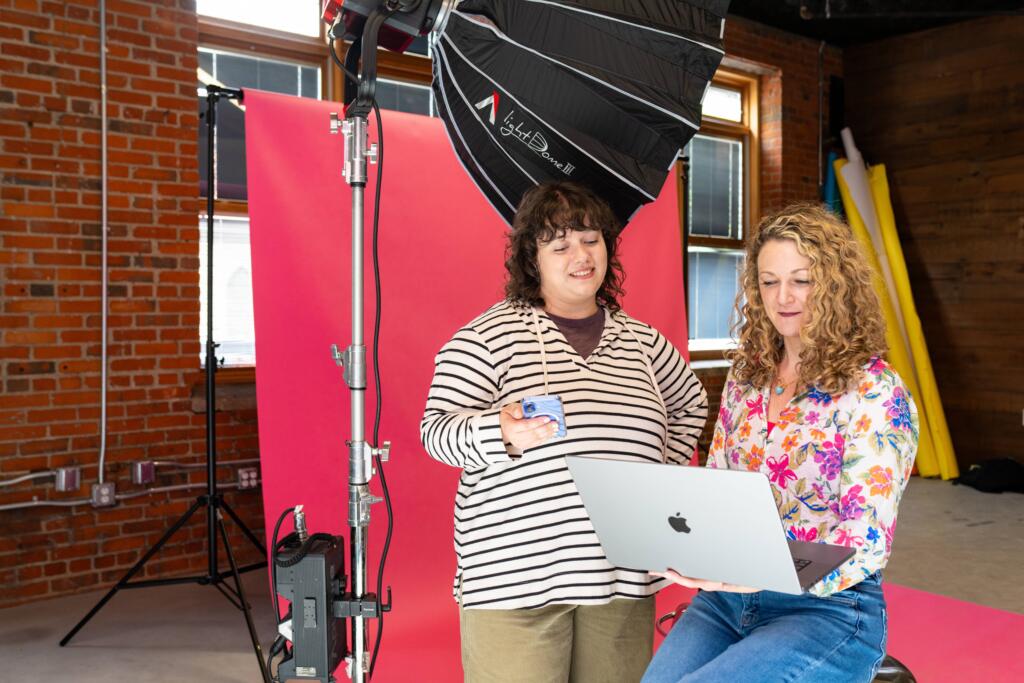
Helpful Tips for Brands: Budgeting for Production
You don’t need to become a producer to budget effectively. You need a rough sense of the project scope before you start asking for numbers, so you can decide whether a quote fits what you need. Even a loose range gives you somewhere to start.
Here’s that starting range:
- A single-location brand photoshoot or a short, straightforward video often lands in the low thousands.
- A professionally-produced brand video with scripting, a small crew, and a few deliverables tends to move closer to the five-figure range.
- Multi-location, multi-day, or highly technical productions (think: a full suite of product videos for a manufacturer or a restaurant group’s production across five concepts) may run well beyond those first two figures.
Each of these ranges reflects a different amount of complexity, and all of them can be reasonable for the right project.
Questions to Ask Before You Request a Quote
To help make sure the quotes you get back are comparable to the actual scope, here’s what’s worth asking before you request one:
- What will this content actually be used for, and for how long? A one-off social clip and an evergreen sales asset don’t need the same investment.
- How many deliverables do you actually need from a single shoot day? Bundling formats is usually more efficient than commissioning them separately later.
- Who has to approve this before it’s final? More stakeholders usually means more rounds, and more rounds should be budgeted for, not discovered halfway through.
- Does this connect to something bigger (a campaign, a launch, a rebrand), or is it standing alone? This answer changes how much strategic planning goes into the budget.
- What’s the actual timeline, and is any of it a rush? Speed has a price, and it’s worth knowing that price before it becomes a surprise.
Media Production as Part of Your Integrated Marketing Strategy
Here’s the shift that changes how all of this feels for many leaders: media production is ultimately most efficient when it’s tied to real goals and planned in advance as part of your overall marketing strategy (rather than priced out on an as-needed basis).
And here’s why: When production gets treated as a one-off request, the budget follows whichever need is loudest that week. You end up with a video here, a photoshoot there, each one negotiated with a different vendor who has no context of the last project or the next one. That’s how companies end up with five vendors who don’t talk to each other and a content library that doesn’t feel like one consistent, strategic brand.
When production is planned alongside your broader marketing strategy, the opposite happens. You know roughly what a quarter or a year of content needs costs, because it’s tied to real business goals: a product launch, a seasonal push, a rebrand rollout.
That’s the real budgeting question underneath “what does this cost”: not just what a single shoot runs, but whether your production spend is actually building on a set strategy.
How Asen Helps Growth-Minded Brands: Budgeting & Beyond
Growth creates more of everything, including the need for content. More products to showcase, more locations to represent consistently, more moments that deserve to be captured well. That’s a good problem to have, but it’s still a problem if you’re pricing every shoot from scratch with no strategic thread connecting them.
This is exactly where Asen’s approach is different. We plan production as one part of a bigger strategy, built around your brand, your growth goals, and your capacity. That means the budget conversation starts with what your business is actually trying to accomplish, and it means your video, photography, strategy, and digital work all move under one connected plan.
So if you came here looking for a quote on a single video or photoshoot, that’s a genuinely good place to start the conversation. What usually follows is bigger: a look at whether that request is already connected to a broader plan, or whether it’s time to build one.
Ready to request a quote? Let’s figure out what a media production budget should actually look like for where your business is headed. Reach out to start the conversation with team Asen or email us at info@asenmarketing.com.
Authored by Stacey DeHart, Chief Operating Officer at Asen Marketing. Over her 25+ years in the agency world, Stacey has built a reputation as the operational backbone who keeps every project, budget, and partnership running the way it should.