
Key Takeaways:
- Private label and contract manufacturers build great products, but those products carry someone else's brand. That leaves the maker invisible to the people actually buying what they make.
- That invisibility isn't just a branding issue, it's a real business risk. It shows up as price pressure, shaky contracts, and no demand of your own.
- The fix isn't to market the products you make for other companies. It's to market your own capabilities, so buyers come looking for you instead.
- A focused private label marketing strategy turns your reputation, reliability, and innovation into steady demand, demand that's actually yours.
Listen to a discussion of this blog 🔊
Somewhere out there, a product you made is sitting on a shelf or in a warehouse, performing exactly as designed, winning over customers who will never know your name. The label belongs to a retailer or a national brand. The formula, the build quality, the consistency, all of that is yours. The credit is not.
If you run a private label or contract manufacturing operation, you know this feeling well. You are essential to the supply chain and invisible at the same time. And while that arrangement can keep the lines running, it creates a quiet problem that catches up with a lot of manufacturers: when your name is never on the box, it’s hard to build any demand that belongs to you.
This is the private brand problem. The good news is that it has a solution, and it starts with changing what you are trying to market in the first place.
Private Label Manufacturing’s Visibility Problem
Private label manufacturing is a powerful model. A brand owner or retailer designs the offer, you produce it, and the product reaches shelves carrying their logo.
White label suppliers do something similar, producing a standardized product that several companies sell as their own. In both cases, the manufacturer does the hard part and the brand on the package gets the recognition.
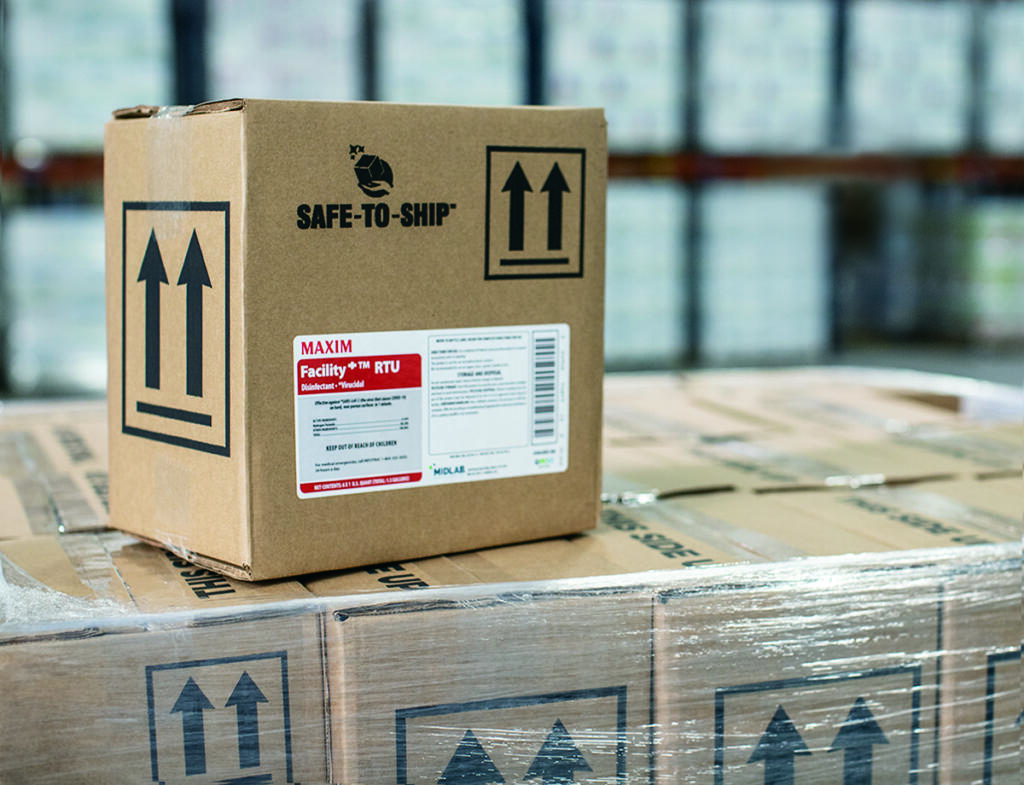
For a while, that trade can feel like a fair one. The orders are large, the relationships are stable, and you get to focus on what you do best, which is making a great product.
The catch is that every unit you ship builds someone else’s brand equity instead of yours. Over time, that adds up to a business that is busy, capable, and almost completely unknown to the market it serves.
Why Contract Manufacturers Stay Invisible
The invisibility is not an accident. It’s built into the model. The brand owner sits between you and the end buyer by design, and that company owns the customer relationship, the marketing, and the story. Distributors and retailers reinforce the same wall. Their job is to make their brand the one people remember, meaning your role is meant to be a silent partner.
That works fine until you want to grow on your own terms. Try to win a new account, raise your prices, or pitch a new capability, and you’ll notice something: you don’t really have a brand to stand on. Buyers know the brands you supply. They don’t know you, the manufacturer who actually makes the product.
Your manufacturing capability should be your biggest asset. Instead, it’s the part of your story nobody ever hears…
The Real Cost of Little to No Visibility
It’s easy to write this off as a branding nuisance instead of a real business problem. But the costs are real, and they add up.
The first cost is price. When buyers can’t tell one private label supplier from another, the conversation defaults to cost per unit. You end up competing in a commodity race that rewards whoever is cheapest (not whoever is best), and your margins absorb the difference.
The second cost is vulnerability. If most of your business comes from a handful of accounts, losing just one can hurt. And without demand of your own, you have no leverage when a big customer asks for a discount, and no one waiting in the wings if a contract ends.
The third cost is missed growth. Maybe you’ve built something to be proud of, a new formulation, a smarter package, a faster turnaround. But none of it earns you a premium if the market doesn’t know it came from you. That’s what strong b2b manufacturing marketing fixes, and it’s a chance most private label manufacturers never get.
The Shift: Stop Marketing Products, Start Marketing Capability
Here’s the reframe that solves the private brand problem. You’ll rarely get to market the end product. It carries your customer’s name and lives inside their brand, so stop trying to.
Build demand for something else instead: your own capabilities and services, the things that make a brand owner pick you over the next supplier. That’s a different goal, and it changes everything about how you market yourself.
Instead of pushing a product the market already credits to someone else, you’re building a reputation for the work only you can do. When a brand needs a private label manufacturer they can trust, or a distributor needs a partner who can scale with them, you want to be the first name that comes to mind. That’s demand for your services, and it’s entirely yours to own.
Your Value is the Brand: What You Can Market Without a Label
Once you make that shift, a whole new story with new opportunities opens up — one where your true capabilities and value lies within the brand, label or no label.
Now, you can market your expertise and process, the disciplined way you turn an idea into a reliable, repeatable product. You can market your quality systems, certifications, and track record, exactly what a serious buyer wants to see. You can market innovation: new formulations, materials, or packaging improvements that solve a real problem for the companies you supply. You can market reliability itself, the on-time, in-full performance that keeps your customers’ shelves stocked. And you can market your people, because in B2B, buyers are choosing a partner as much as a product.
The channels follow naturally from there: A website built to speak to brand owners and buyers, not consumers, becomes your most important sales asset. Search visibility matters too, because the people looking for a private label manufacturer or white label supplier are searching for exactly that, and showing up when they search is what private label marketing does for you.
Add real content around your capabilities, a real presence on platforms like LinkedIn, and sales materials that make your ultimate value easy to understand, and buyers have every reason to choose you on purpose.
Turning Buyers & Prospects into Demand for Your Services
It helps to be precise about who you are actually marketing to. You’re not chasing the end consumer who buys the finished product, you’re reaching the brand owners, retailers, distributors, and procurement teams who decide which manufacturer earns their business. That audience is smaller, more identifiable, and more reachable than a consumer market, which is good news for your budget.
Demand among those buyers is built the same way trust is built anywhere…
- You show up consistently in the places they look.
- You rank for the terms they search when they need a new manufacturing partner.
- You publish proof that you can do the work, whether it’s case outcomes, certifications, clear explanations of your processes, or other trusted content.
- You stay visible between buying cycles so that when a contract comes up for review or a brand decides to expand, your brand is already a known, credible option.
Done well, this is the heart of a manufacturing marketing strategy, and it turns a quiet supplier into a sought-after partner.
What This Looks Like in Practice
This isn’t just theory for us. For nearly a decade, Asen has partnered with Midlab, a cleaning chemical manufacturer in an industry where marketing usually takes a back seat. Before we started working together, Midlab had no formal marketing program — something that’s pretty common for a B2B manufacturer focused on production over promotion.
Instead of trying to out-bid the market, we focused on building a brand around Midlab’s true capabilities and approach to innovation. Through brand strategy, creative campaigns, packaging, and digital marketing, Midlab brought fresh energy to a quiet, risk-averse category. And the campaigns didn’t just look different, they helped the company stand out as a maker worth knowing, not just another name on a supplier list.
The results followed. Alongside their own sales and operations efforts, Midlab grew revenue by roughly 300% over ten years, along with real brand recognition in the commercial cleaning space. Their COO put it simply: they wanted a partner willing to learn their business and push them to think ahead.
The lesson here applies to any private label or contract manufacturer: even in an industry where no one expects marketing to matter, building demand around your ownable value and capabilities helps create an edge that’s hard for competitors to copy.
A Private Label Marketing Strategy That Builds Over Time
Here’s how to put it into action. Escaping the private brand problem isn’t about one campaign, it’s a strategy that builds on itself over time. A few things matter most.
Start by getting clear on your real audience, the buyers of your services, and get honest about why they should choose you over anyone else. Sharpen that into a clear position, then put it everywhere a prospect might find you, starting with a website built for partners, not consumers.
Invest in search visibility for the terms your buyers actually use, since that’s how most of these relationships start. Build proof you can point to: case studies, certifications, a clearly explained process. Then keep showing up. Demand for a manufacturing partner builds through consistency and reputation, not one big push.
None of this means walking away from the private label work that pays the bills. It just gives you something that work alone never will: a brand of your own, and demand that isn’t tied to someone else’s.
How Asen Helps Build & Grow B2B Brands
Helping capable companies get the recognition they deserve is what we do. For more than 40 years, Asen has helped build and grow brands across industries, including manufacturers who were tired of being the “best-kept secret” in their category.
At Asen, we know how to turn a strong operation into a story buyers remember, and how to turn manufacturing capability into demand for your services.
If your products are doing great work under someone else’s name, there’s a better path. Book a strategy session with the Asen team, and let’s build demand you can own.
Authored by Brookney Chamberlain, Chief Executive Officer at Asen. With nearly two decades of full-service agency experience, Brookney has led agile, adaptive marketing strategies for large-scale manufacturers and other B2B brands across the Southeast and beyond.